
If you’ve noticed that kids today seem more anxious, quicker to melt down, or harder to reach -you’re not imagining it. Teachers are seeing it in classrooms. Parents are seeing it at home. And therapists like us see it every day in our work with children.
The reasons are complex, but the good news is that understanding why children struggle points us directly toward how to help.
Childhood anxiety and depression have been rising steadily for years. More children are arriving at school already carrying stress – from family pressures, overpacked schedules, social challenges, or simply the weight of a world that moves faster than their developing nervous systems can keep up with.
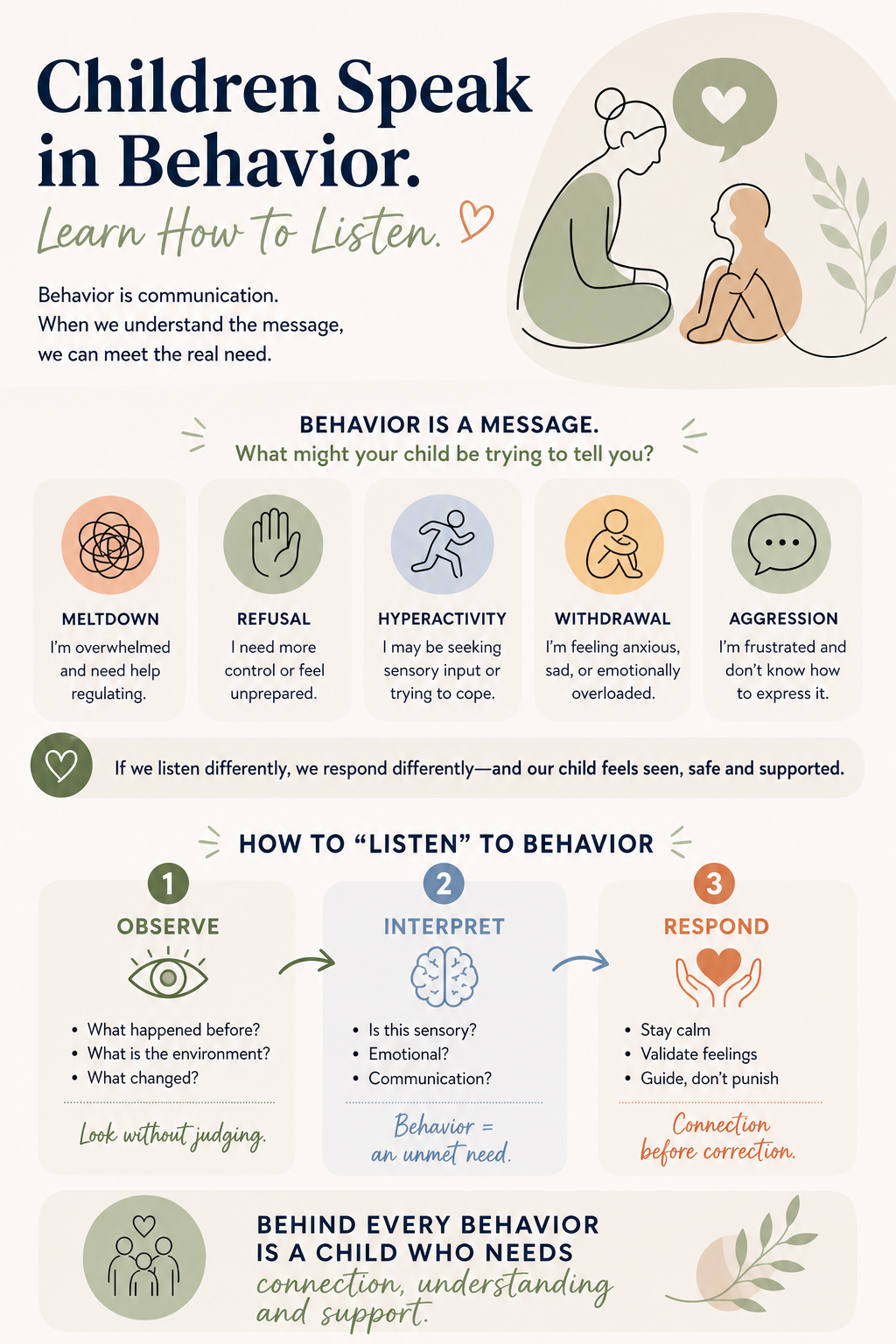
For many kids, these pressures show up not as sadness or worry they can name and talk about, but as behavior. Meltdowns, avoidance, aggression, shutting down, or constant physical complaints like stomachaches and headaches. These aren’t simply behavioral problems – they’re signals. A child’s nervous system is communicating something important, even when they don’t have the words.
Occupational therapy offers a unique and powerful lens for understanding why children struggle. Rather than focusing only on diagnosis or symptoms, OT looks at how a child’s sensory, emotional, and regulatory needs affect their ability to participate in everyday life – school, friendships, family routines, and play.
Every child’s nervous system processes sensory information differently. Some children are highly sensitive – easily overwhelmed by noise, crowds, unexpected touch, or transitions. Others crave intense sensory input and seem to constantly seek movement, pressure, or stimulation just to feel settled.
When a child’s sensory system is dysregulated, everything else becomes harder. Focusing in class, making friends, managing emotions, even sitting through a meal – all of these depend on a nervous system that feels safe and organized. Children who struggle with sensory processing aren’t being difficult. Their brains are working overtime just to get through the day.
Self-regulation is the ability to manage emotions, attention, and behavior in response to what’s happening around you. It’s not something children are born knowing how to do – it develops gradually, through consistent experiences, safe relationships, and predictable environments.
When a child’s life lacks those building blocks – whether due to family stress, trauma, instability, or simply too much stimulation and too little downtime – self-regulation suffers. We see it as impulsivity, difficulty waiting, emotional outbursts over seemingly small things, or an inability to shift between activities without falling apart. These children aren’t choosing tobehave this way. Their nervous systems genuinely haven’t yet developed the tools to do otherwise.
Emotional regulation is closely linked to self-regulation, but it specifically involves a child’s ability to recognize, understand, and manage their emotional states. Many children – especially those who have experienced adversity, inconsistent caregiving, or high levels of stress – never learned how to identify what they’re feeling, let alone what to do with it.
When emotions feel big and unmanageable, children either explode outward or collapse inward. Both responses make sense when you understand what’s happening in the nervous system. The goal isn’t to stop children from having big feelings – it’s to build the capacity to move through them safely.
Some children carry an additional layer of difficulty rooted in early adversity. Adverse ChildhoodExperiences – things like family instability, emotional neglect, exposure to conflict at home, or loss of a caregiver – are more common than most people realize. Research suggests nearly two-thirds of high school students have experienced at least one of these events.
These experiences don’t just affect a child emotionally. They shape the developing brain and nervous system in lasting ways, making it harder to regulate stress responses, trust relationships, or feel safe in the world. For these children, sensory dysregulation, emotional overwhelm, and behavioral challenges aren’t character flaws – they’re understandable responses to difficult circumstances.
This is why a trauma-informed approach to therapy matters so much. Instead of asking “what’s wrong with this child?” we ask “what has this child experienced, and what do they need?”
Play-based occupational therapy is uniquely suited to help children build the skills their nervous systems need.
Through carefully designed play experiences, children develop body awareness, practice tolerating challenging sensory input, and gradually build the capacity to recognize and manage their emotional states. Play isn’t just enjoyable – it’s the primary way children learn. It’s how they process experiences, practice new skills, and build resilience without the pressure of performance.
At PlayCircle Therapy, our approach is child-led and relationship-based. We meet each child exactly where they are, building trust before we build skills. Because regulation always comes before learning – a child who doesn’t feel safe cannot grow.
Supporting a child’s sensory and emotional wellbeing doesn’t require a therapy degree. Small, consistent shifts at home make a real difference:
If you’re noticing persistent changes in your child’s mood, behavior, or ability to function at school or home – trust your instincts. Early support makes a real difference, and asking for help is never something to feel ashamed of.
At PlayCircle Therapy, we help children build the self-regulation, sensory, and emotional skills they need to feel capable, calm, and connected – through the power of play. If you’re concerned about your child, we’d love to connect.
Contact us today to learn more about how we can help.