Children with attention-deficit/hyperactivity disorder (ADHD) often experience challenges with focus, impulse control, organization, and emotional regulation. These difficulties can affect school performance, daily routines, and social relationships. Occupational therapy offers meaningful, practical support by helping children develop skills that allow them to participate more successfully in everyday life – at home, at school, and in the community.
Occupational therapy focuses on how children function within their environments. Rather than addressing behavior in isolation, therapy considers sensory processing, routines, task demands, and environmental expectations. For children with ADHD, this whole-child approach is essential. Many struggles stem from challenges with executive functioning skills such as planning, attention, time management, and self-monitoring.
One key area addressed in occupational therapy for ADHD is organization. Children may have difficulty keeping track of materials, following multi-step directions, or completing tasks independently. Therapists introduce visual supports such as checklists, schedules, and color-coded systems to help make expectations clear and manageable. Breaking tasks into smaller steps reduces overwhelm and helps children experience success.
Time management is another common challenge. Visual timers, structured routines, and predictable transitions help children better understand the passage of time and stay engaged with tasks. These strategies are especially helpful during homework, morning routines, and classroom activities.
Many children with ADHD experience differences in sensory processing. Some children seek movement and physical input to stay alert, while others may feel overwhelmed by noise, visual clutter, or touch. Occupational therapy helps identify each child’s sensory needs and introduces appropriate regulation strategies.
Movement breaks, heavy-work activities, calming tools, and flexible seating options can help children maintain an optimal level of alertness. These strategies support focus and participation rather than distracting from learning. When sensory needs are met, children are often better able to regulate emotions and behavior.
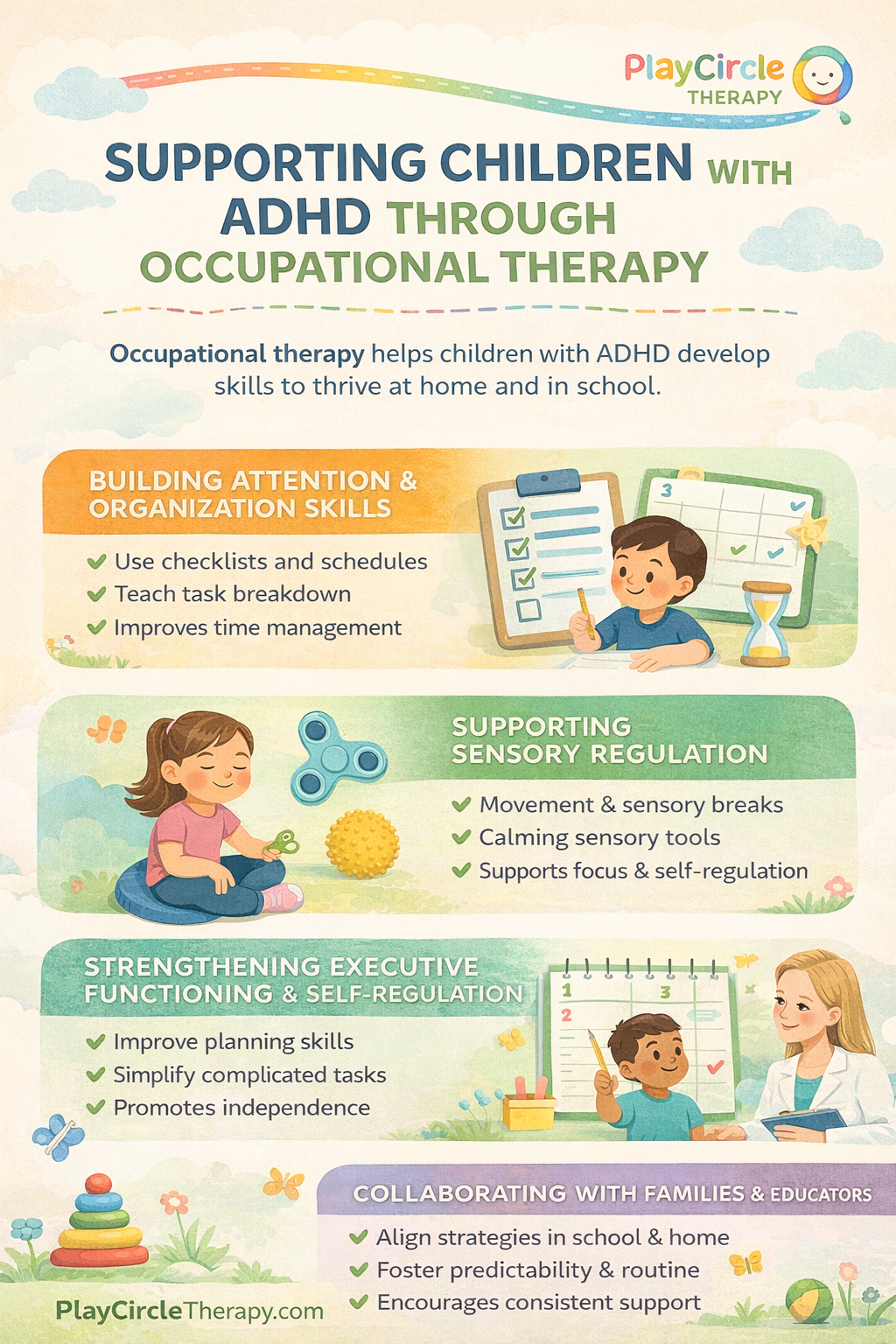 Strengthening Executive Functioning and Self-Regulation
Occupational therapy also supports the development of self-regulation skills. Children learn to recognize how their bodies feel, identify when they need a break, and use strategies to calm or refocus themselves. Over time, these skills build independence and confidence.
Therapists work closely with families and educators to ensure consistency across settings. When strategies used in therapy are reinforced at home and school, children experience predictable expectations and stronger skill carryover.
Occupational therapy does not aim to change who a child is – it helps children use their strengths while building tools to manage challenges. With the right supports in place, children with ADHD can thrive academically, socially, and emotionally.
At PlayCircle Therapy, we believe that every child deserves strategies that support success, participation, and confidence. Occupational therapy provides a supportive path forward – helping children with ADHD engage more fully in their daily lives.