The transition into kindergarten is one of the most important milestones in a child’s early development. It marks the moment when play-based learning and early social experiences merge with more structured classroom expectations. To support this shift, many schools are embracing a collaborative approach to kindergarten readiness – one that brings together therapists, educators, and families to identify strengths and emerging needs before the school year begins.
A well-designed kindergarten screening process allows professionals to observe children across several essential areas: physical development, early academic foundations, communication, attention, self-regulation, and comfort with new routines. Instead of waiting for learning barriers to surface months into the school year, screenings offer an opportunity to understand each child holistically and create supportive strategies right from the start.
One effective method is to conduct screenings in late spring, when incoming students can be evaluated without the pressures of the fall semester. By forming a unified team – including occupational therapists, speech-language pathologists, physical therapists, classroom teachers, and support staff – schools gain a complete picture of each child. This multidisciplinary perspective helps ensure that no single area is overlooked, whether it’s fine motor control needed for writing, the ability to follow simple directions, or adjustments to being away from parents.
Many programs categorize screening results into three broad tiers. Children who demonstrate age-expected skills are often placed in a “ready” group, where families simply receive resources to continue supporting development over the summer. A second group may include children who show mild delays or inconsistent skills. These students typically benefit from targeted activities, classroom accommodations, or additional monitoring once school begins. A third group includes children who present with clearer, more significant challenges. In these cases, early evaluation and intervention can be recommended to provide meaningful support well before academic demands increase.
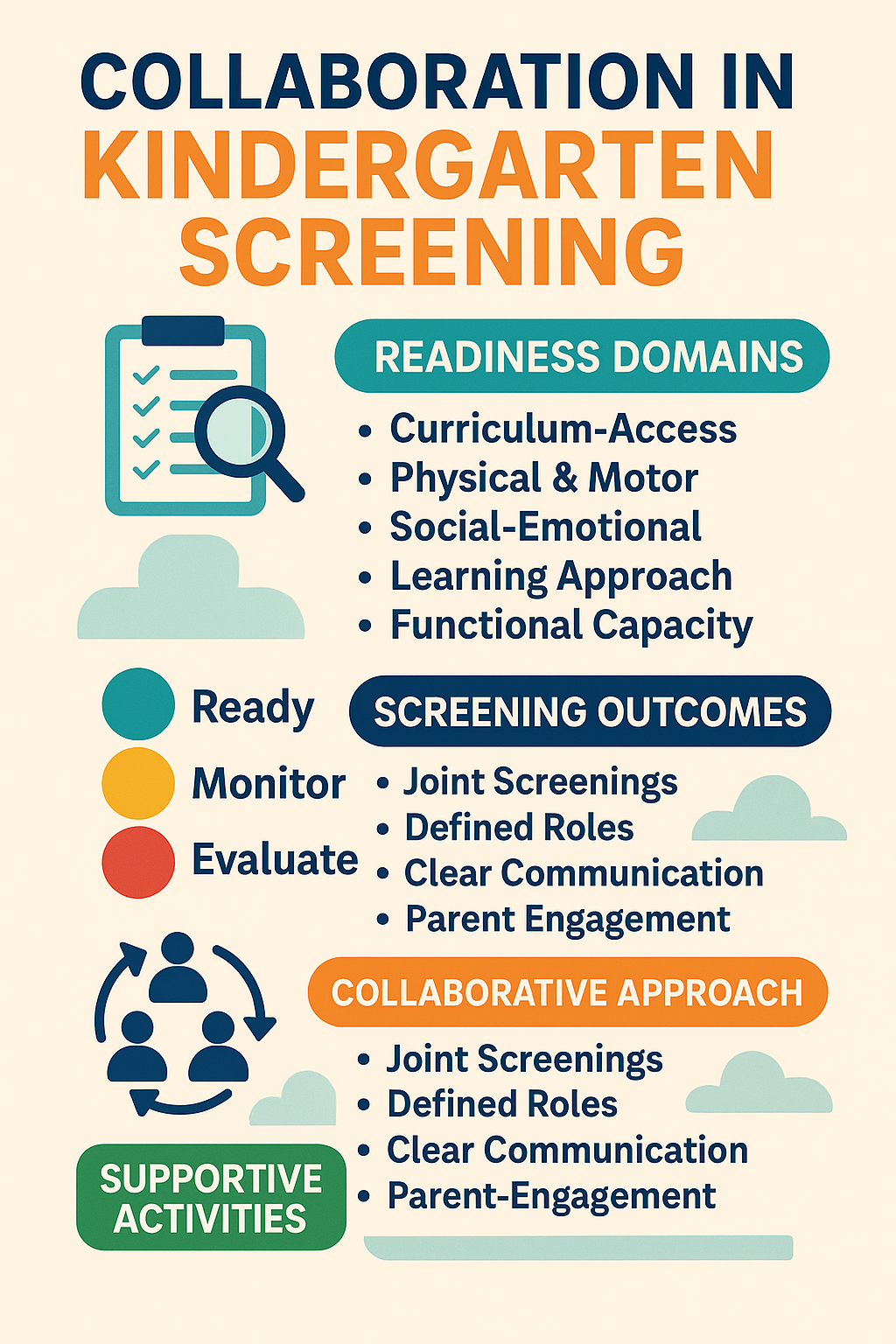 Collaboration is the true strength of this model. Instead of assessments occurring in isolated rooms by individual specialists, screening days are organized with shared roles, common materials, and a consistent process. Staff may rotate through stations while children participate in short, engaging tasks that assess motor skills, early literacy concepts, social interaction, and basic problem-solving. This structure ensures efficiency while also making the experience enjoyable and low-stress for young learners.
Equally important is how results are communicated. Families receive easy-to-understand summaries, suggestions for home activities, and clear next steps if follow-up is recommended. Teachers, too, are given practical guidance for the upcoming school year – such as which students may need extra movement breaks, visual cues, or hands-on learning tools.
Many classrooms also incorporate simple, developmentally supportive activities inspired by screening observations. For example, placing oversized alphabet or number lines on the floor allows children to practice motor planning while learning foundational skills. Tabletop centers using tongs, putty, tweezers, or small manipulatives help build hand strength and coordination. These activities naturally blend with the kindergarten curriculum, supporting readiness while keeping learning playful and meaningful.
Ultimately, early collaboration sets the tone for a child’s entire school experience. When professionals work together and involve families from the beginning, children enter kindergarten with greater confidence and support. Rather than focusing on remediation later, schools can prioritize prevention, early guidance, and a warm, welcoming start to learning. By building this foundation early, we give children not only the skills they need – but the environment they deserve – to thrive in their first year of school.