
Play is far more than something children do “for fun.” It is a vital part of healthy development, learning, and well-being. One of my favorite descriptions of play comes from the National Institute for Play, which describes it as a gateway to vitality – a naturally rewarding experience that sparks curiosity, builds mastery, encourages connection, and boosts both emotional and physical health. This perspective closely mirrors what we see in pediatric practice every day: when children play, they thrive.
At PlayCircle Therapy, we view play through a wide lens. It is not limited to playground equipment, toys, or structured games. Play can happen anywhere – on a mat, on a swing, at the art table, and so on. What makes something “play” is less about the activity itself and more about the qualities within it.
In our work, we look for a few important cues:
These signs of intrinsic motivation, internal control, and creativity help us understand whether an activity truly feels playful to the child.
Not all activities fall neatly into “play” or “not play.” Some situations may sit in a gray area. Children might be engaged, but the routine may be adult-directed or tightly structured. Even in those settings, small adjustments can make the experience more playful: inviting pretend elements, offering choices, or experimenting with flexible roles. These shifts help children bring more of themselves into the moment.
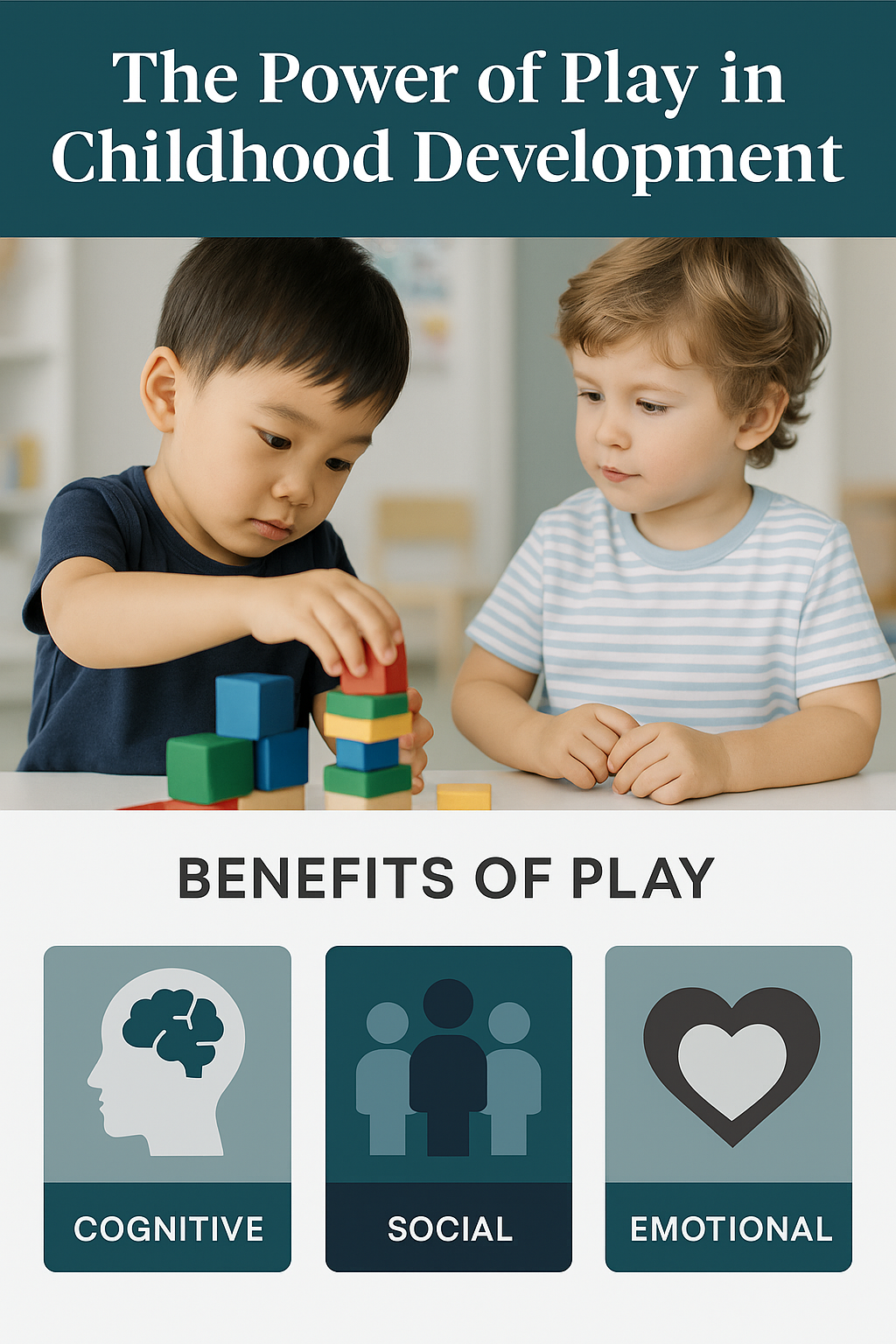
We recognize that play is the primary occupation of childhood. It fosters physical development, social-emotional skills, problem-solving, resilience, and self-expression. Research across multiple disciplines shows that play strengthens brain development, promotes creativity, supports executive functioning, and contributes to overall health and well-being. Globally, the importance of play is so widely recognized that it is considered a fundamental right of every child.
When we evaluate children at PlayCircle Therapy, we look at play directly – its variety, motivation, meaning, and context. We observe how children explore materials, interact with peers, and engage in familiar routines. We notice how they manage frustration, how they navigate choices, and how environments support or limit their ability to play freely. This helps us design meaningful, family-centered interventions that honor each child’s interests and strengths.
Play can be used as a tool to support specific skill areas, but it can also be the goal itself. Sometimes we use playful tasks to build motor, sensory, or communication skills. Other times, our aim is simply to help a child experience joy, agency, imagination, and the freedom to explore. In both cases, we keep intrinsic motivation at the heart of the process.
Ultimately, our goal is to make play accessible to every child across home, school, and community settings. When children feel confident in their play, they develop a deeper sense of capability and belonging. And when families understand how and why play matters, they can nurture it in meaningful ways throughout daily life.