
When parents begin exploring occupational therapy for their child, they often hear about many different approaches. One method you may come across is DIR/Floortime. While the name may sound technical, the idea behind it is simple and powerful: children learn best through warm relationships, meaningful play, and everyday interactions.
DIR/Floortime focuses on meeting children where they are and building skills through connection.
DIR stands for Developmental, Individual Differences, and Relationship-Based.
“Floortime” describes how adults join children in play – often right on the floor – following the child’s interests while gently guiding them toward new skills.
Rather than directing play, the adult becomes a partner, encouraging back-and-forth interaction, shared attention, and problem solving.
DIR/Floortime is commonly used with children who experience challenges with communication, emotional regulation, sensory processing, attention, or social engagement. However, its principles can benefit many children.
During Floortime sessions, therapists and caregivers help children:
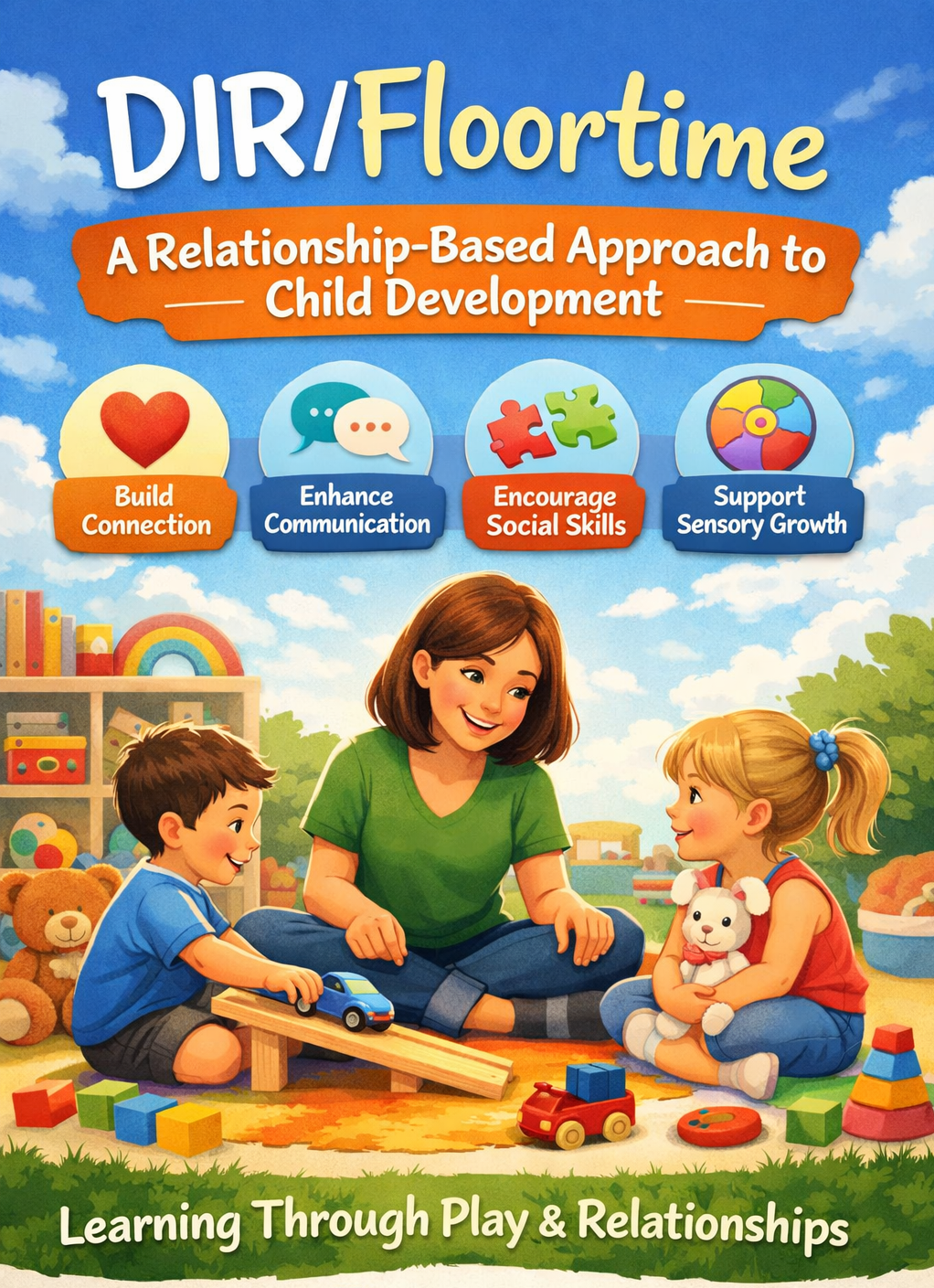
Because activities are based on a child’s interests, learning feels motivating and natural rather than forced.
A Floortime session doesn’t follow a strict script. Instead, it evolves through playful interaction.
For example, if a child is lining up cars, the therapist might join in by adding another car, creating a small obstacle course, or introducing a simple game. These moments invite the child to interact, communicate, and think creatively.
The adult continuously observes the child’s cues and adjusts support accordingly—sometimes leading, sometimes following, always staying connected.
This flexible approach allows children to practice important skills in ways that feel safe and enjoyable.
One of the most valuable aspects of DIR/Floortime is that it extends beyond therapy sessions. Parents and caregivers play a central role.
By learning Floortime strategies, families can turn everyday routines – mealtime, bath time, getting dressed, or playtime – into meaningful opportunities for connection and development. Small, consistent moments of engagement can make a big difference over time.
DIR/Floortime looks at the whole child, not just isolated skills. It honors each child’s unique strengths while gently supporting areas of growth. Most importantly, it places relationships at the heart of development.
At PlayCircle Therapy, we believe progress happens through connection, play, and understanding each child as an individual. DIR/Floortime aligns beautifully with this philosophy, helping children build confidence, communication, and emotional resilience – one playful interaction at a time.
If you’d like to learn more about how relationship-based therapy approaches can support your child’s journey, we’re here to help.